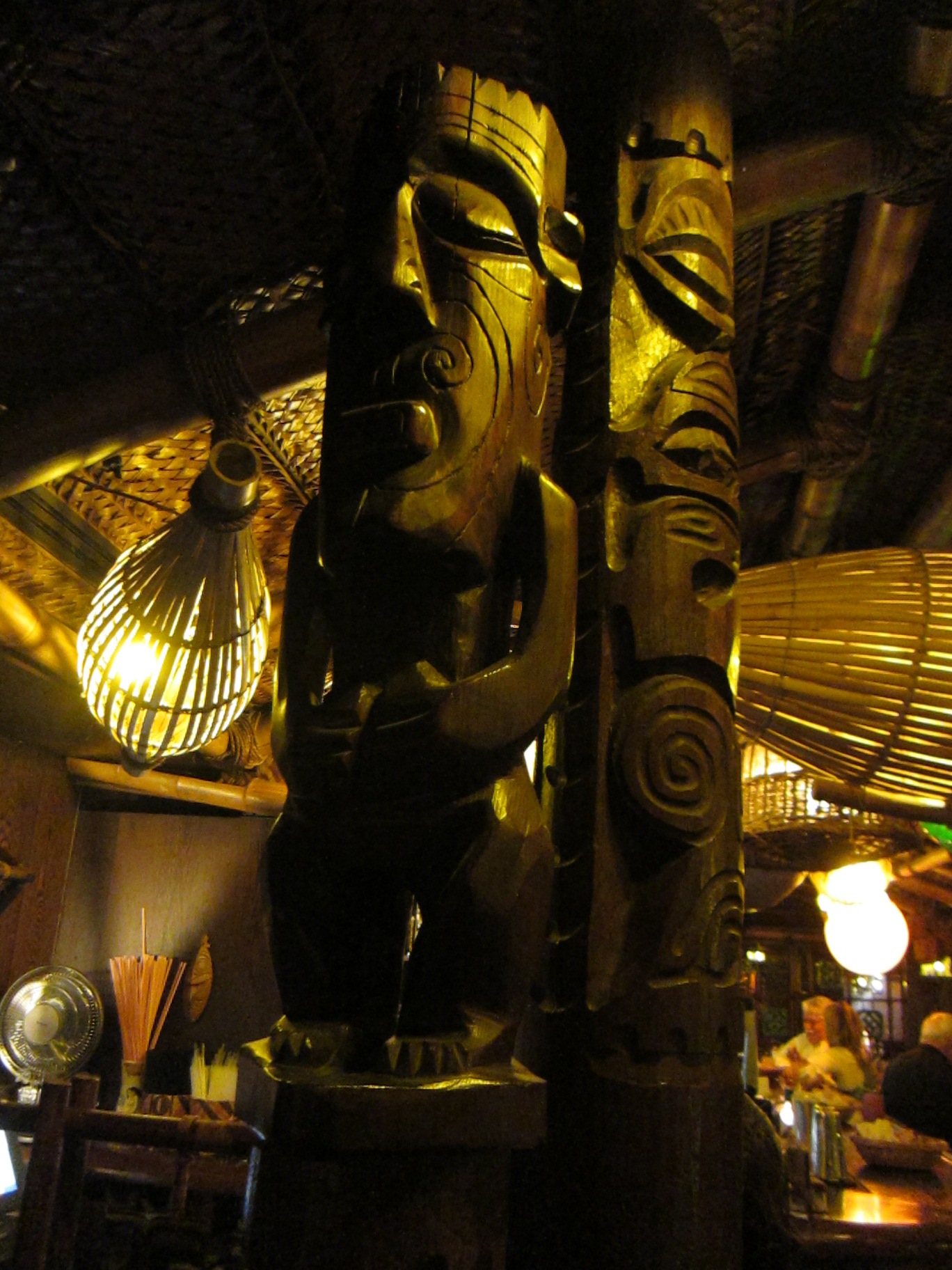
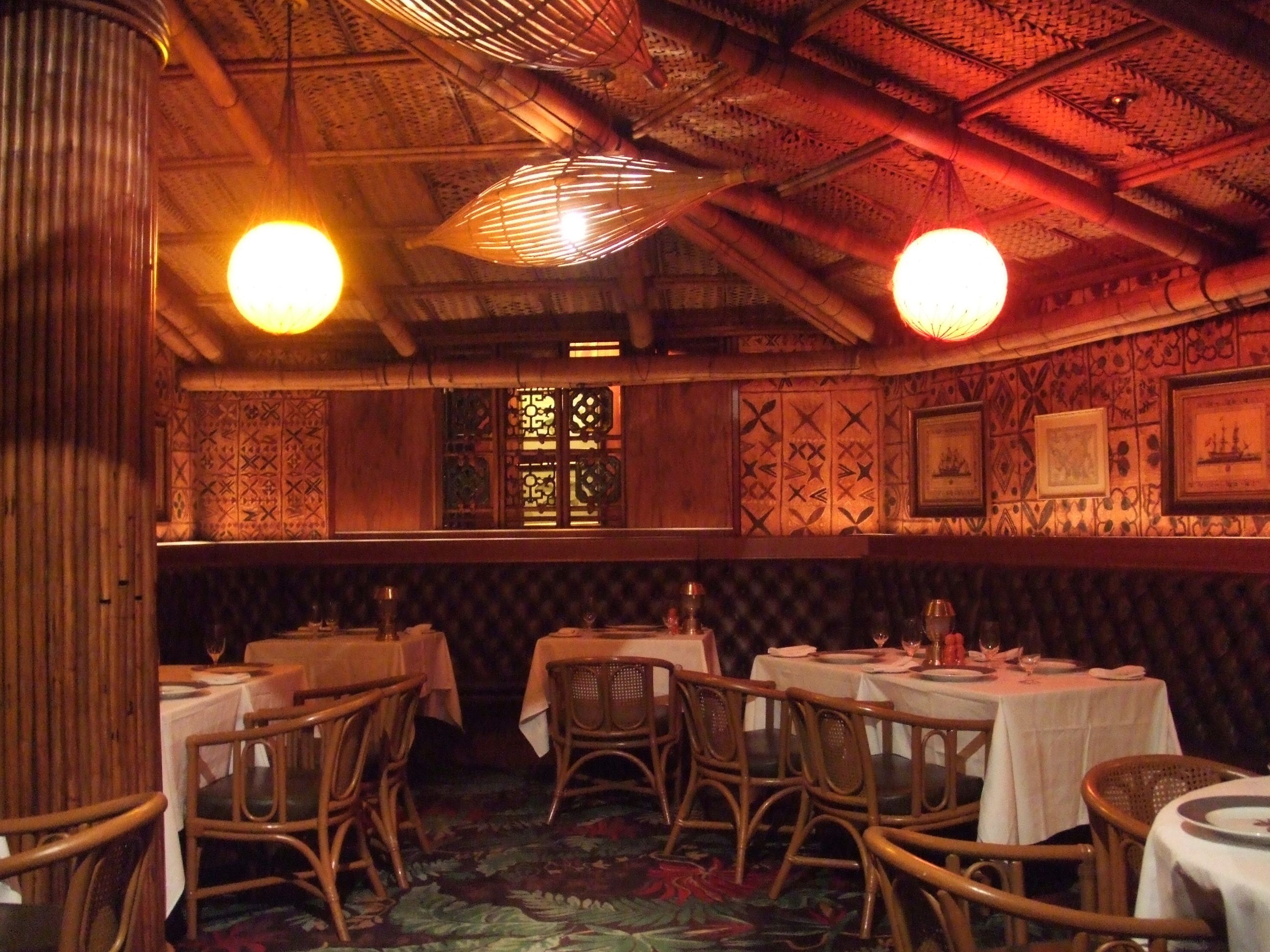
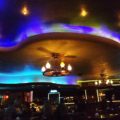
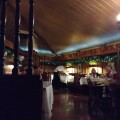
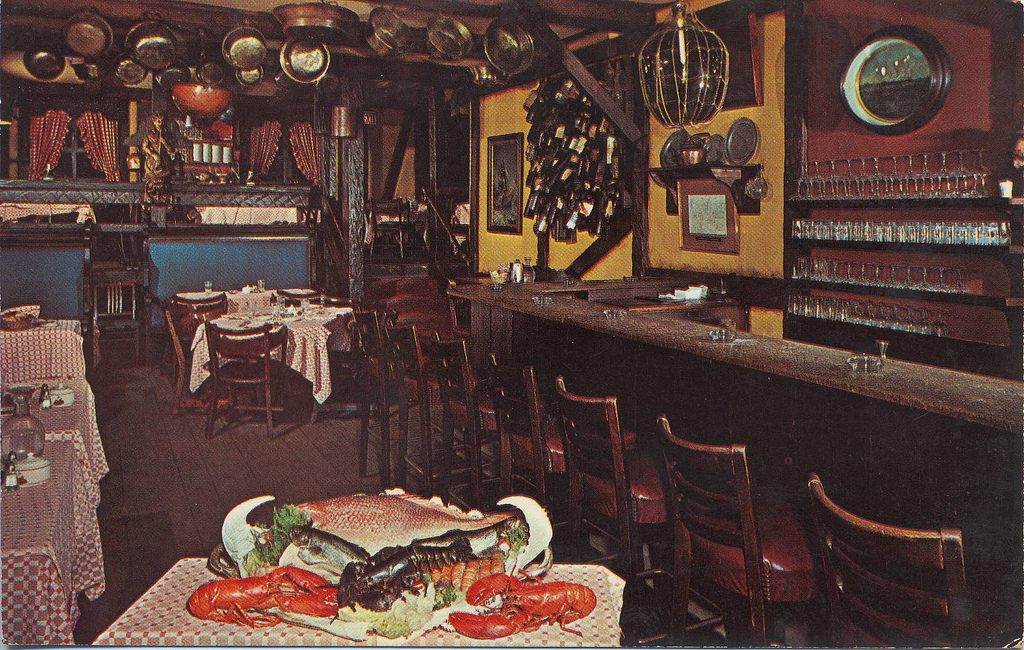
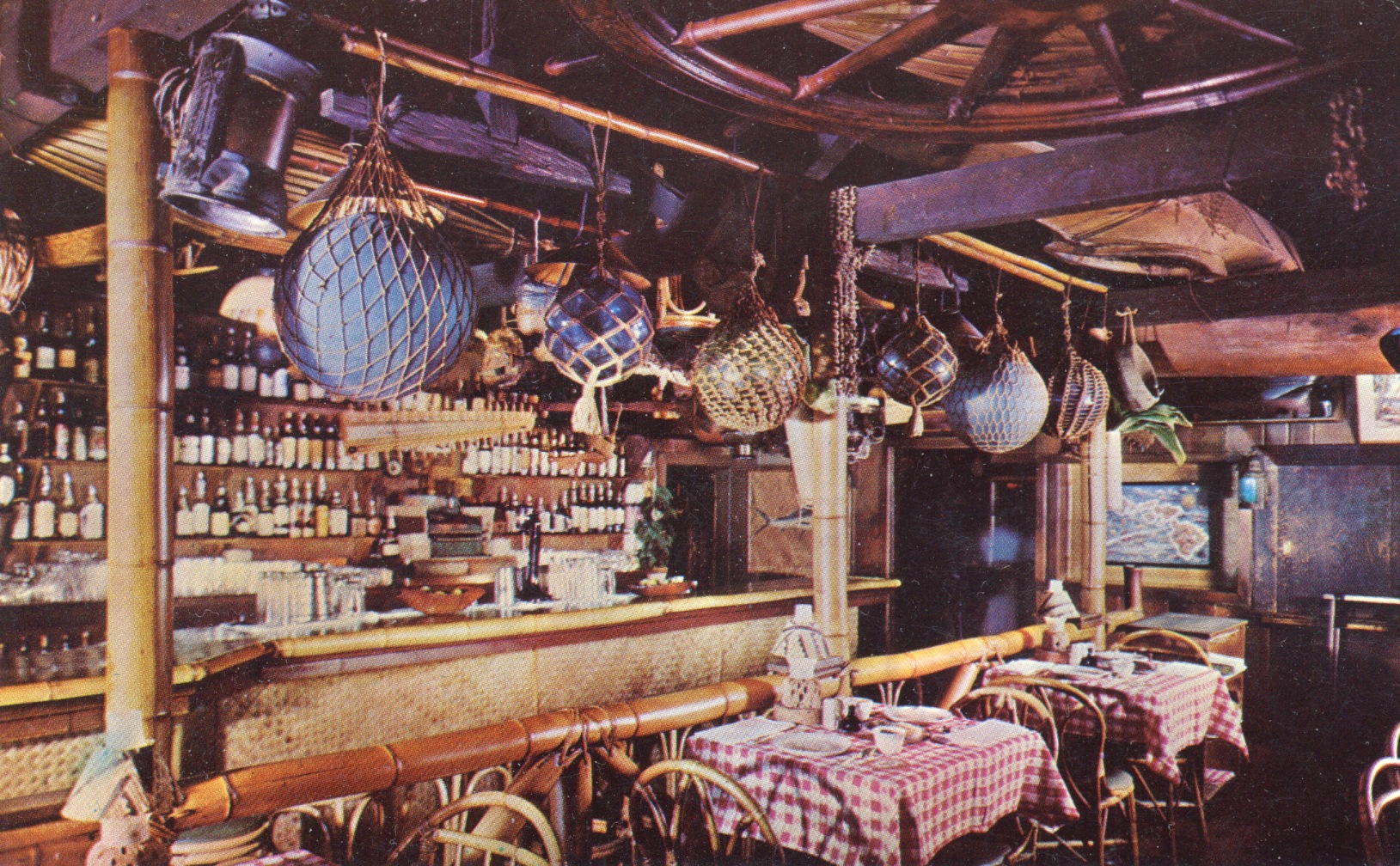
 “The Deck” overlooking the bar, Trader Vic’s, Oakland – from The Jab’s collection
This location, the first Trader Vic’s, closed in 1972 – more info
“The Deck” overlooking the bar, Trader Vic’s, Oakland – from The Jab’s collection
This location, the first Trader Vic’s, closed in 1972 – more info
The old town of Segovia in Spain is a short train ride from Madrid and a town everyone should visit on a day trip or, even better, an overnight from Spain’s capital. It’s a beautiful city spectacularly set on a hill surrounded by the old city wall, with a fairy-tale alcázar (palace) on one end (where Isabella I was crowned Queen of Castile and León), a gorgeous 16th century gothic cathedral in the middle, and a jaw-dropping 2000-year-old Roman aqueduct at the other end, built from 25,000 granite blocks without mortar or reinforcing. In 1985 the entire old town was declared a World Heritage Site by UNESCO.
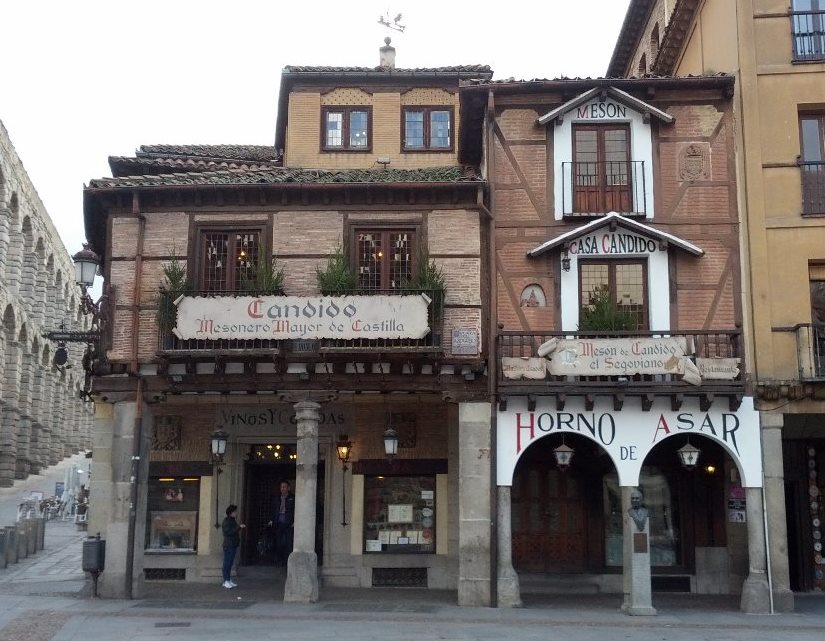
photo by Dean Curtis, 2014
Located next to the aqueduct on the Plaza del Azoguejo, Mesón de Cándido’s history as an inn (restaurants are often called inns in Spain) dates back to 1786. In 1931, Cándido López, a cook in Segovia since he was a child, purchased the inn, then called Mesón de Azoguejo. The restaurant, renamed Mesón de Cándido, quickly became famous for the Segovian specialty roasted suckling pig (cochinillo asado), among other dishes. In the photo above the original inn is on the right, with the words painted on the front: Mesón (inn), Casa Candido (Candido’s house), and Horno de Asar (broiler for roasting meats). In Segovia and the surrounding area the suckling pig must follow certain criteria to be of high quality and be roasted correctly until the skin is crisp so that when presented at the table the meat can be “carved” with the edge of a plate, as is the tradition started and made famous at Mesón de Cándido.
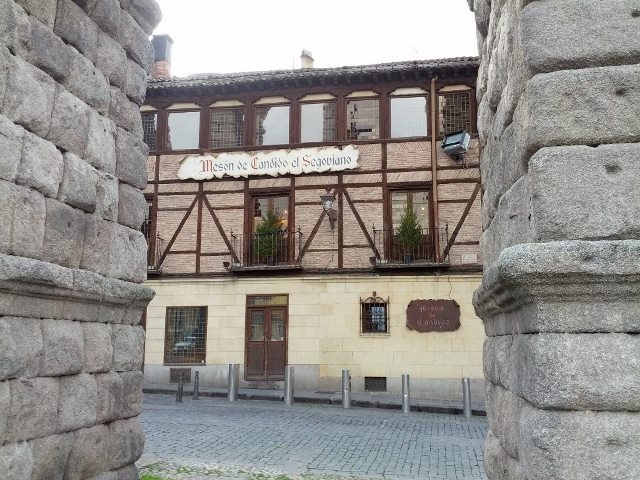
photo by Dean Curtis, 2014
In 1941 the inn was enlarged and remodeled into what it looks like today, with several dining rooms filled with paintings and photographs, brass cookware, pottery, bric-à-brac, and murals portraying Segovian scenes. Over the years many famous persons, including royalty, politicians, and celebrities have visited the restaurant.
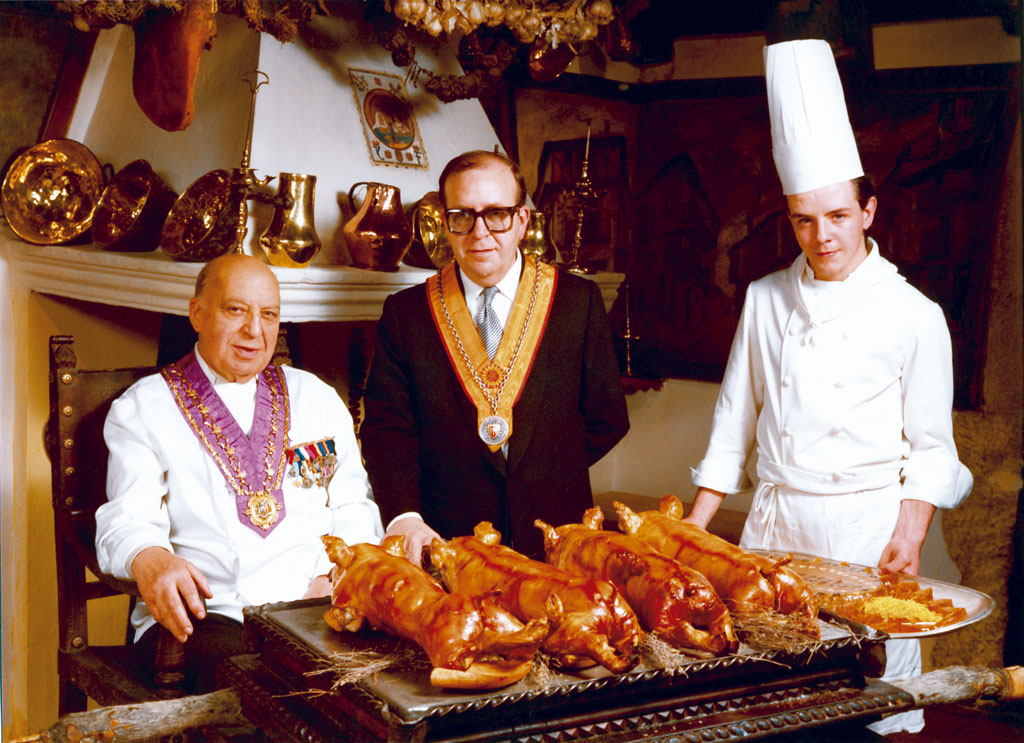
L to R: Cándido López, Alberto Cándido and his son – photo by Mesón de Cándido web site
Cándido López’s son, Alberto Cándido, who holds the title Head Innkeeper of Castile, now runs the restaurant with his son, continuing the family traditions. The family’s pride in the restaurant shows in the gracious service I received from señor Cándido and his staff and in the excellent food I was served.
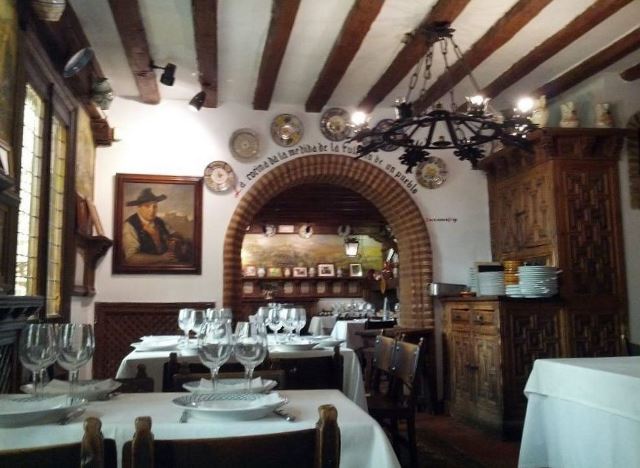
Hombres Illustres (illustrious men) dining room – photo by Dean Curtis, 2014
On my visit last year I took the high-speed train from Madrid, arriving in Segovia in about 30 minutes. From the train station outside of town you can take an inexpensive bus to the old town, or a taxi, which I did so I could check in to my hotel directly. I made reservations for lunch, asking for a table with a view of the aqueduct, and the above photo is the viewpoint I had from my table. Below is the aqueduct visible through the window.
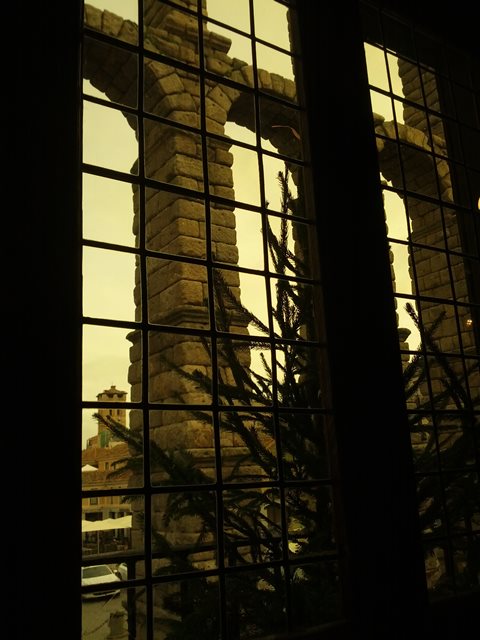
photo by Dean Curtis, 2014
As I was planning on having roast suckling pig for dinner that night I had a “light” lunch of a salad with tuna (a very fresh shredded tuna, not canned tuna like you would expect to be served in many restaurants in the U.S.) and a Castilian specialty, perdiz estofada (partridge stew), with some wine from Ribera del Duero. Other local specialties on the menu include sopa Castellana (Castilian garlic soup), Sepulveda-style roasted baby lamb, judiones de la Granja con oreja de cerdo (stew with white beans from La Granja, pigs ears and trotters), wild boar with apple, and their famous suckling pig. Save room for the special Segovian layer cake, ponche segoviano.
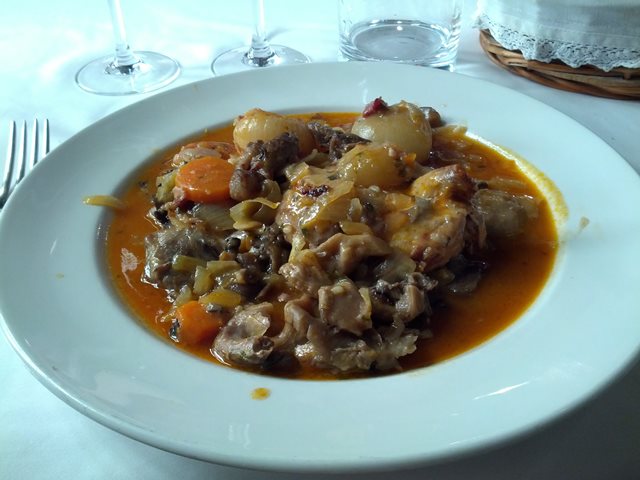
partridge stew – photo by Dean Curtis, 2014
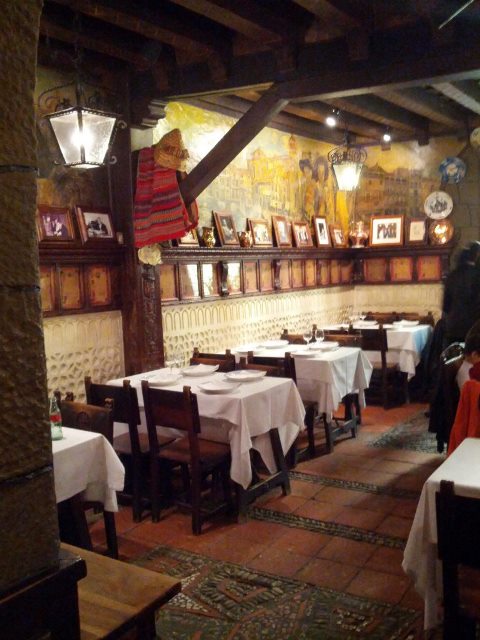
Embajadores dining room with 1941 murals – photo by Dean Curtis, 2014
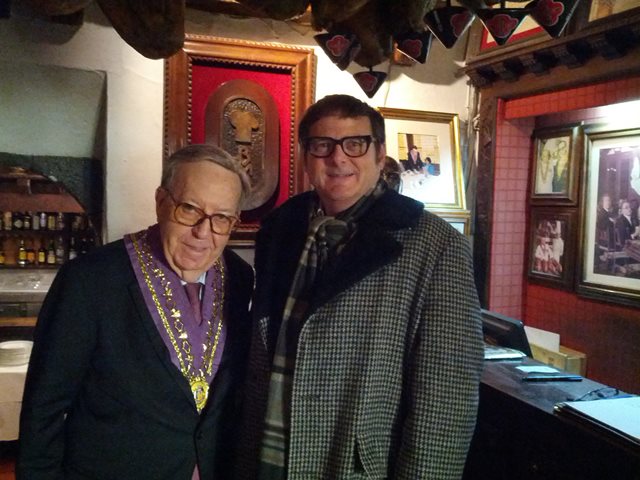
The Jab with Alberto Candido – photo by Dean Curtis, 2014
Mesón de Cándido
Plaza Azoguejo, 5, 40001 Segovia, Spain
Phone: +34 921 42 59 11
Open daily for lunch, 1:00pm – 4:30pm, and dinner, 8:00pm – 11:00pm
For years when someone asked me what is my favorite steakhouse in San Francisco I’ve answered “Alfred’s”. There is no better combination of vintage atmosphere, a classic steakhouse menu of dry-aged steaks with traditional sides, and great service, all at reasonable prices. When I want to splurge on the best steak in the city I’ll go to Harris’ (look for it in a future post), but Alfred fills the bill for a great steakhouse experience without breaking the bank.
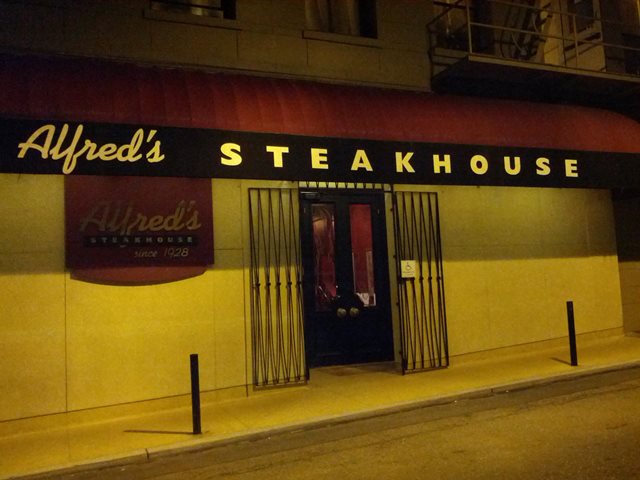
photo by Dean Curtis, 2015
Alfred’s was opened in on Vallejo Street in 1928 by Alfredo Bacchini from Cattolica, Italy, who had worked his way up from a busboy to opening his own restaurant at 27 years old. He moved the restaurant to Broadway Street a year later, where it remained for seven decades, though it was moved a bit in 1952 for construction of the Broadway tunnel. Click on the following photo of Broadway looking west to see an enlarged view and see if you can spot Alfred’s next to the tunnel entrance. Jack Kerouac went there for dinner in his book On The Road.
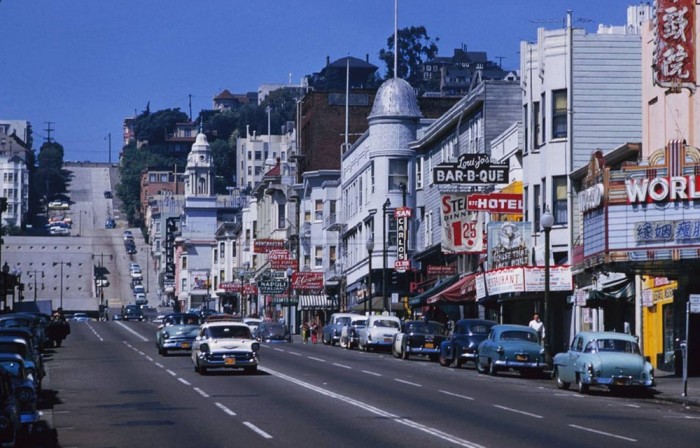
Broadway Street, 1957 – photo by Charles Cushman on hemmings.com
In 1958 Alfred’s was remodeled from its original look with dark wood walls and booths, similar to how Tadich Grill looks now, into a “continental” style with tufted leather (or vinyl) booths, white linen tablecloths, mirrored walls, and three chandeliers, which are exact replicas of the ones in the Vienna Opera House (as Alfred was a big opera fan). In 1973 Arturo Petri, a North Beach native by Italian parents, purchased Alfred’s and ran it with his son Al.
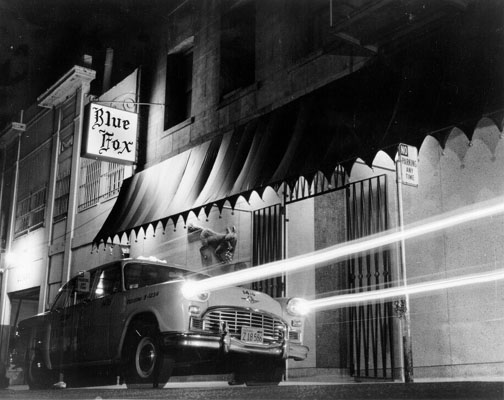
Blue Fox restaurant, San Francisco
In 1997 Alfred’s decided to relocate due to losing the lease on their valet parking lot. They moved into the world-famous Blue Fox restaurant’s space. The Blue Fox opened in 1920 (in a different location) and closed in 1993. Alfred’s booths, bar top, and chandeliers were all moved from the restaurant on Broadway into the new location. In 2010, Al Petri’s son Marco bought into the business and Al retired. The new generation of the Petri family thankfully has kept Alfred’s pretty much the same. The menu changed a little, but all of Alfred’s steakhouse classics remain and the decor and atmosphere have not changed.
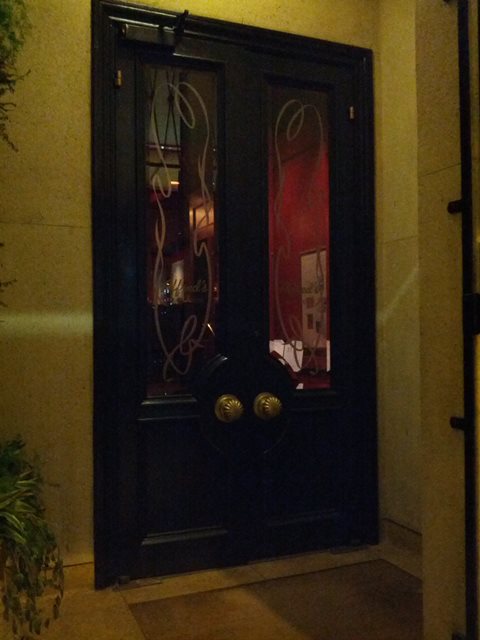
entrance – photo by Dean Curtis
When you enter the restaurant through the grand doors you enter the foyer (be sure to check out the vintage menus on display) and up a couple of steps to the host stand. Continuing to your right you pass the refrigerated cases where the meat is dry-aging and into the bar and lounge. There is a cocktail menu these days with some fine choices, but I usually order a martini or Manhattan with a premium spirit (they have an excellent liquor selection). The cocktails are very generous, which usually isn’t my preference because they can get warm before you finish, but here they give you the shaker so you can medicate at your leisure, so I approve.
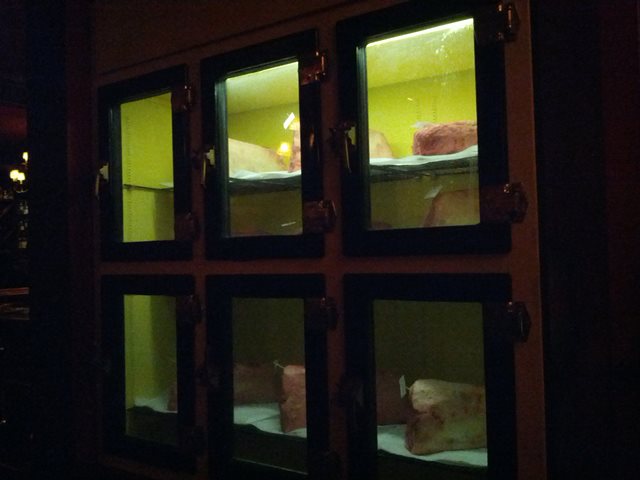
steak dry aging cases – photo by Dean Curtis
Alfred’s has two dining rooms: the main dining room with the original booths and chandeliers…
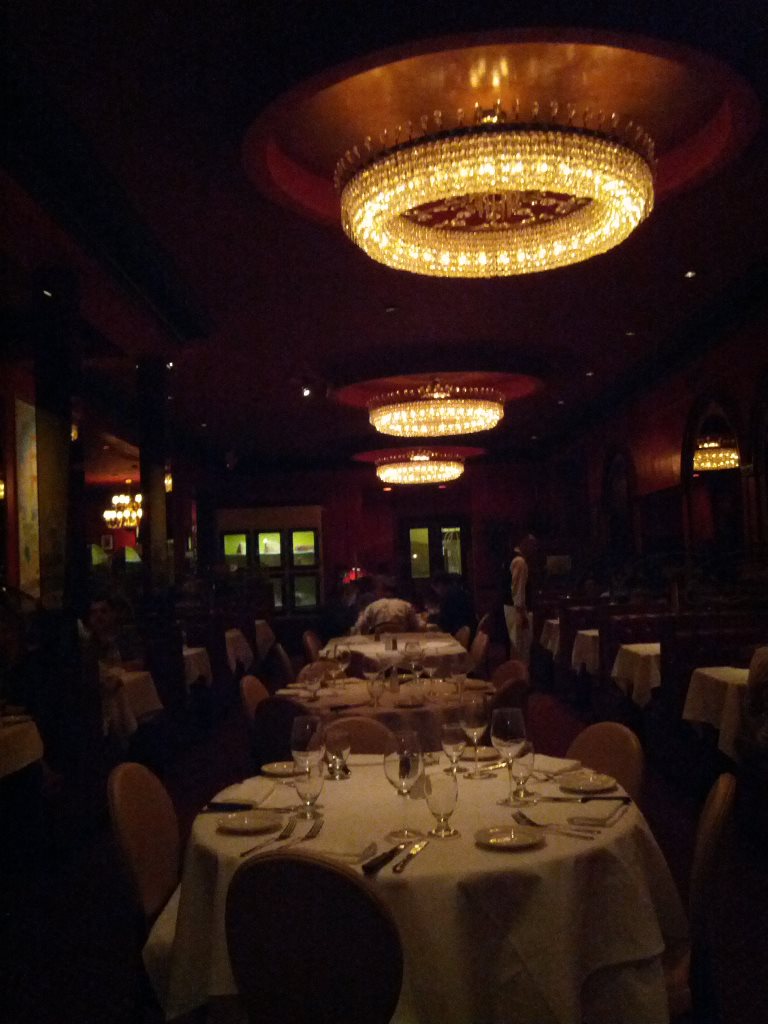
main dining room – photo by Dean Curtis
…and the side dining room. As you can see in my photos, the lighting is dim, just how Le Continental likes it.
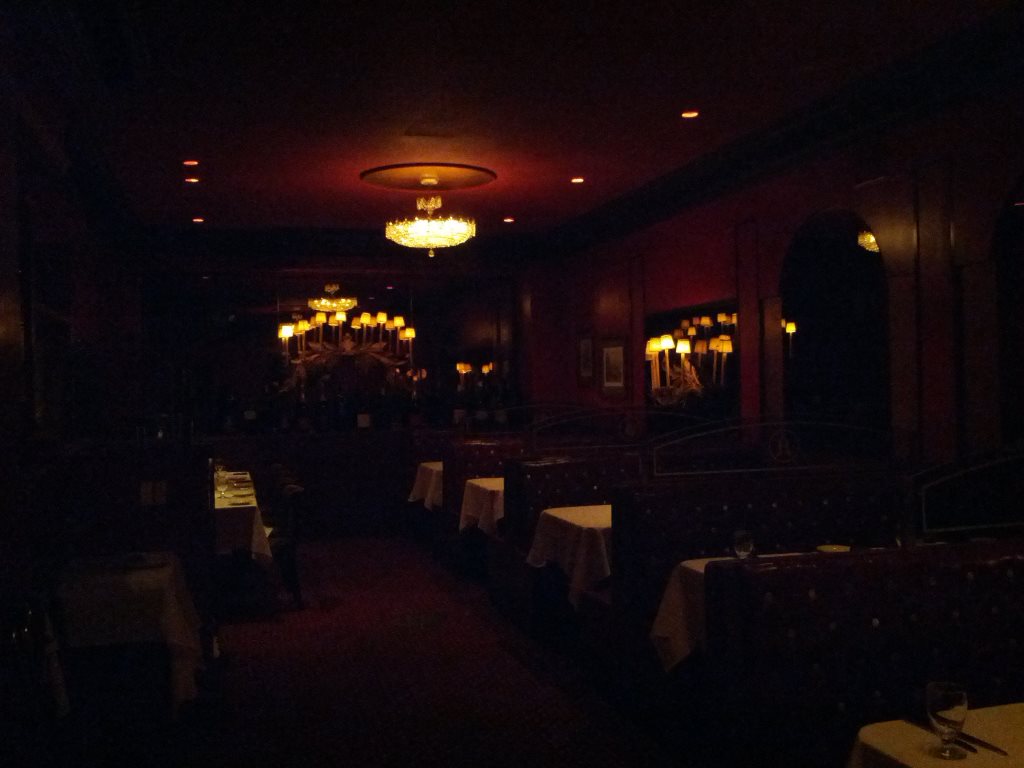
side dining room – photo by Dean Curtis
Alfred’s serves beef that is from the upper one-third of the USDA Choice grade. There is a lot of variation in the Choice grade and the “High Choice” grade can be practically as good as USDA Prime when it comes to flavor and tenderness. The menu offers about seven cuts of steak (some in two sizes), including a bone-in New York, Porterhouse, Ribeye (with or without the bone), and USDA Prime New York. All the above steaks are corn-finished and dry-aged 28 days. They also offer a grass-fed, wet-aged filet mignon. They have other entrees, such as lamb, chicken, and lobster. Entrees come with one side so, although the steaks are not inexpensive, they are a good value. Homemade sauces are only $1.50 extra. Excellent sourdough bread comes with your meal.
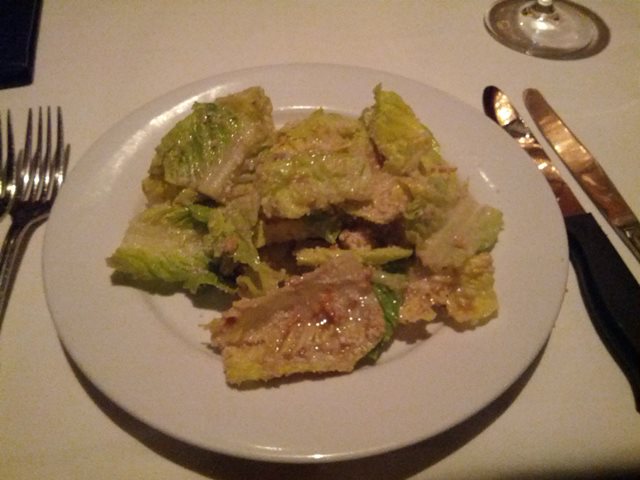
Caesar salad – photo by Dean Curtis
On my recent visit I tried the $55 School Night Supper (Sun-Thur), which comes with a salad or soup, a choice of one of three of their regular steaks (bone-in New York, ribeye, and filet mignon), any side, any sauce, and any dessert. Doing the math, this is a good deal if you want (and will have room for) dessert (which is basically free). But without dessert it is slightly cheaper to order the items separately. I miss their early-bird special 3-course prix-fixe dinner, which was under $40. But even at $55 the meal was wonderful, with a tasty salad, fresh vegetables, a flavorful steak that was cooked perfectly (medium rare, which I find, frustratingly, can vary a lot from steakhouse to steakhouse), and a delicious dessert.
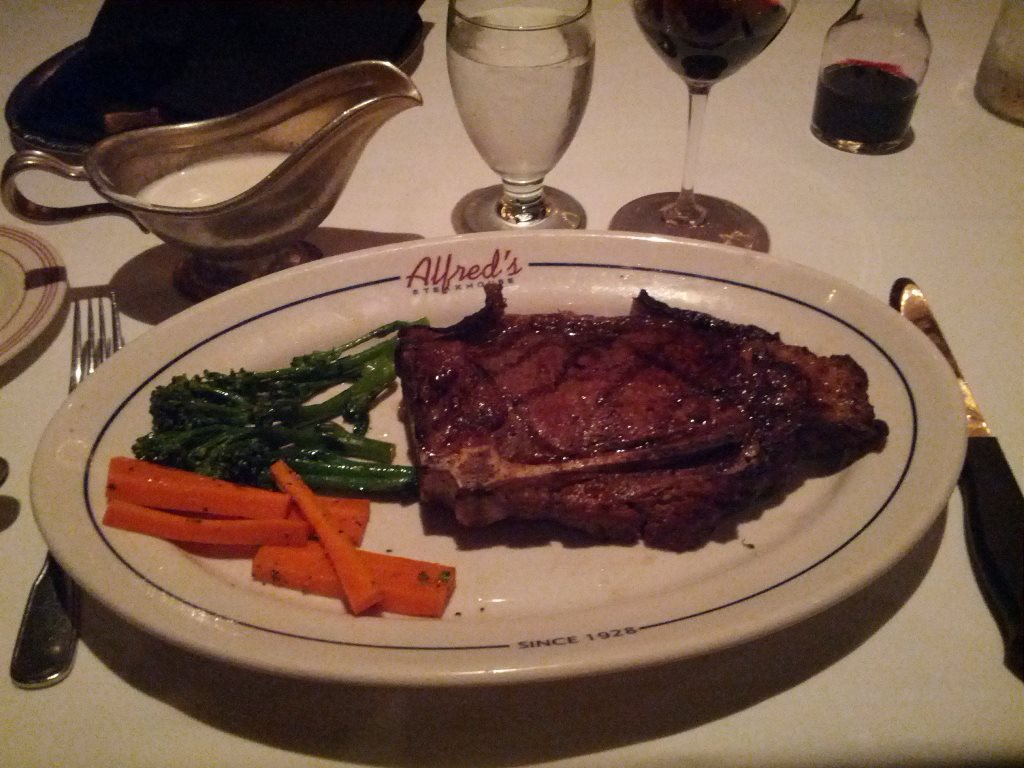
bone-in New York steak – photo by Dean Curtis
Alfred’s adds an 18% gratuity to every check and distributes it among staff in both the front and back of the house, which is clearly stated on the menu (so don’t give them a bad review on Yelp because you didn’t know, OK?). But if you have good service (like I’ve always had) you can always (and should) give a few percent more.
Alfred’s
659 Merchant St, San Francisco, CA 94111
(415) 781-7058
Open for dinner daily 5:00pm – 9:00pm, lunch only on Thursday 11:30am – 2:00pm
This blog is primarily intended to celebrate classic and historic restaurants that still exist, but occasionally I will be posting about a restaurant that is gone or recently closed.
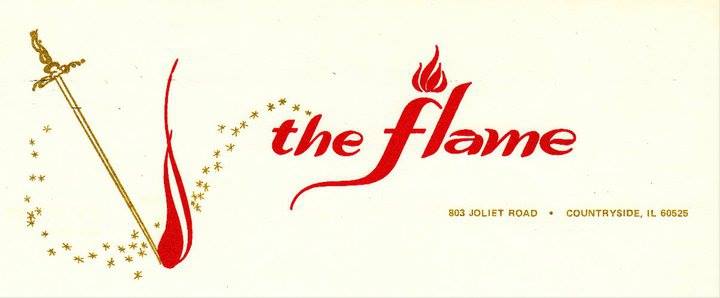
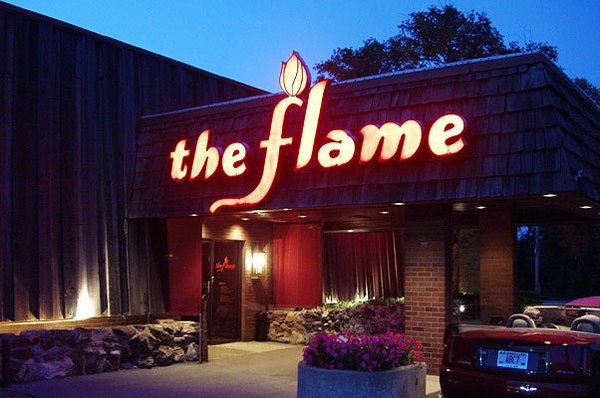
photo from The Flame facebook page
The Flame was opened in the suburbs outside of Chicago in 1958 by Peter Makris.
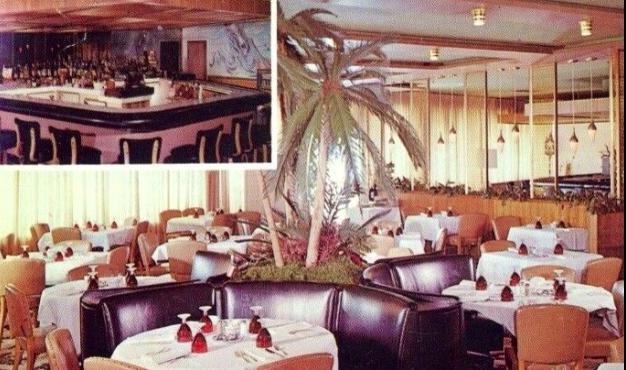
early postcard from The Flame facebook page
It was remodeled sometime after the postcard photos above and below were taken.
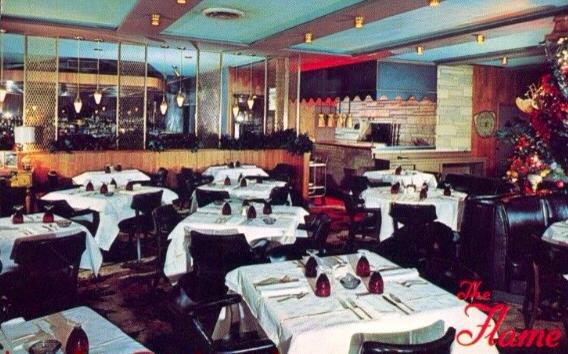
postcard from The Flame facebook page
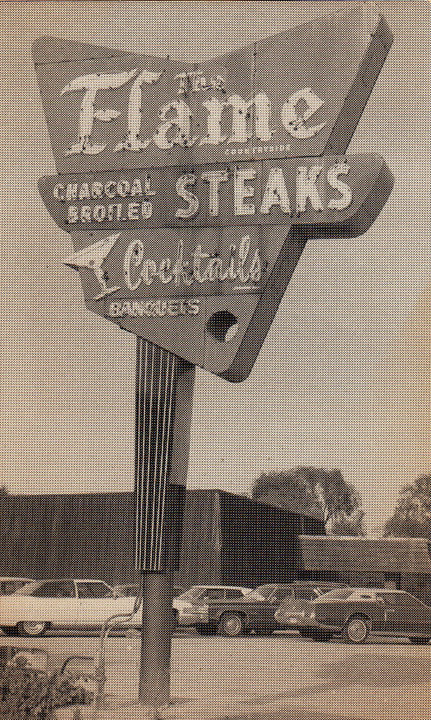
sign in 1970s – photo by The Flame facebook group
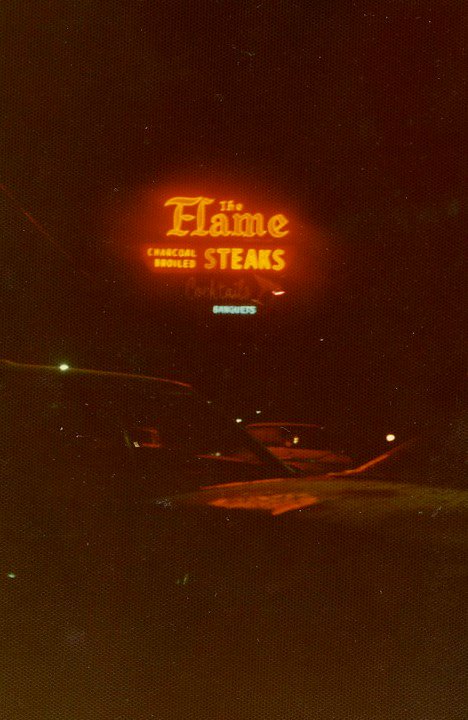
sign in 1970s – photo by The Flame facebook group
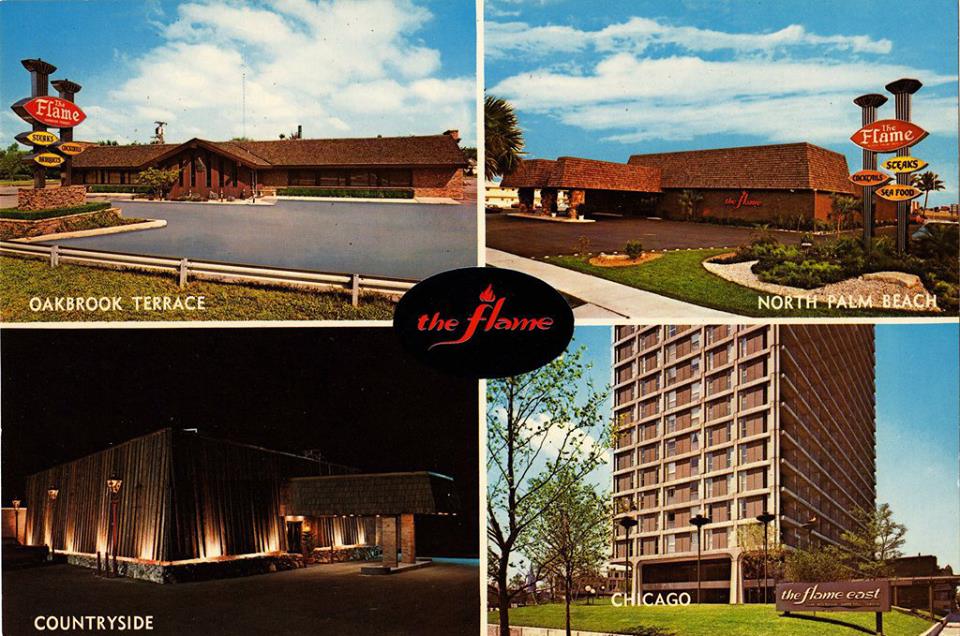
postcard from The Flame facebook page
In its heyday The Flame restaurant expanded to locations in Chicago (The Flame East in Lincoln Park Tower, which was reportedly frequented by employees of the Playboy Club) and Florida (in Palm Beach, North Palm Beach, and Stuart). The chain also opened several locations of Lord Chumley’s Pub in Florida and one in St. Charles, Illinois (still there, but remodeled).
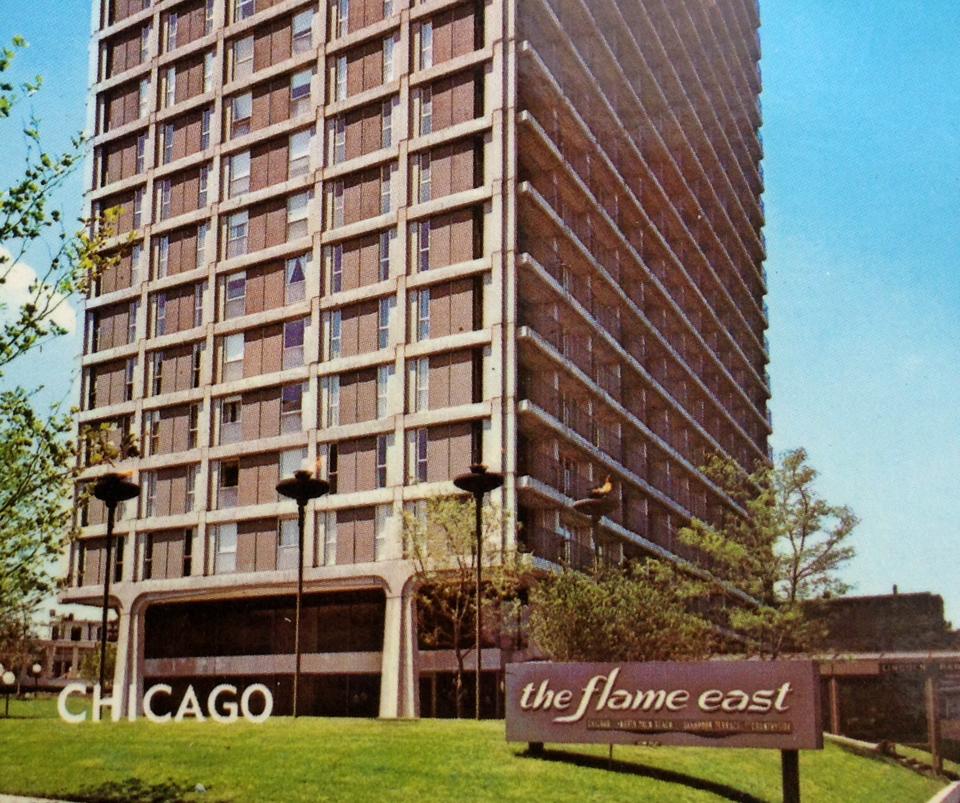
postcard from The Flame facebook page
Many celebrities and sports figures were regulars at The Flame, including Evel Knievel and Jack Costanzo, the famous drummer who performed there every Saturday night in the mid-1990s.
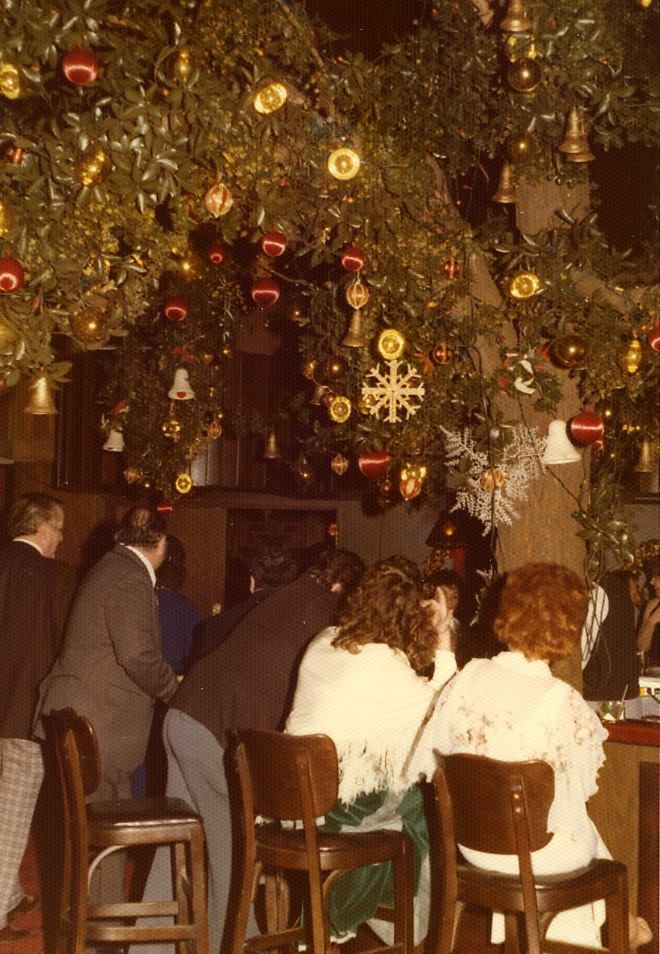
tree lounge in the 1970s, – photo from The Flame facebook page
Inside the bar was a large tree covered with flowers and colored lights, and Christmas ornaments in season. I’m not sure when this feature was added as it doesn’t show in early postcards, but it was known as the Tree Lounge eventually.
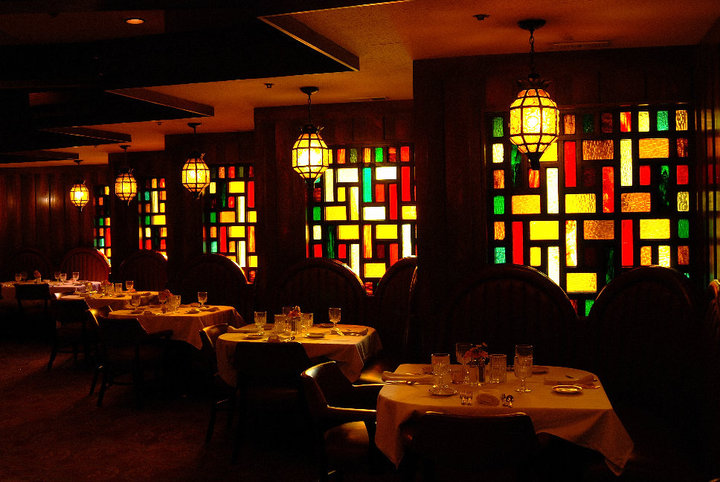
recent photo from The Flame facebook page
In 2003 I dined there and it looked like it does in the more recent photos above and below.
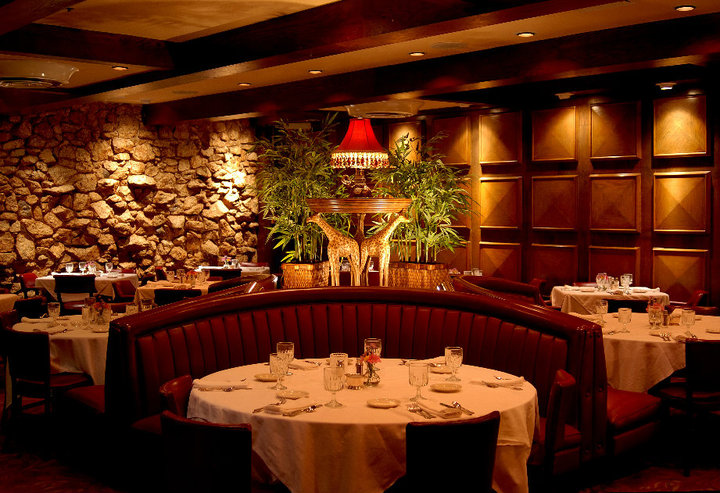
recent photo from The Flame facebook page
I don’t recall much except we ordered steaks. I always wanted to return but never made it out there on subsequent visits to Chicago in 2005, 2007, and 2010.
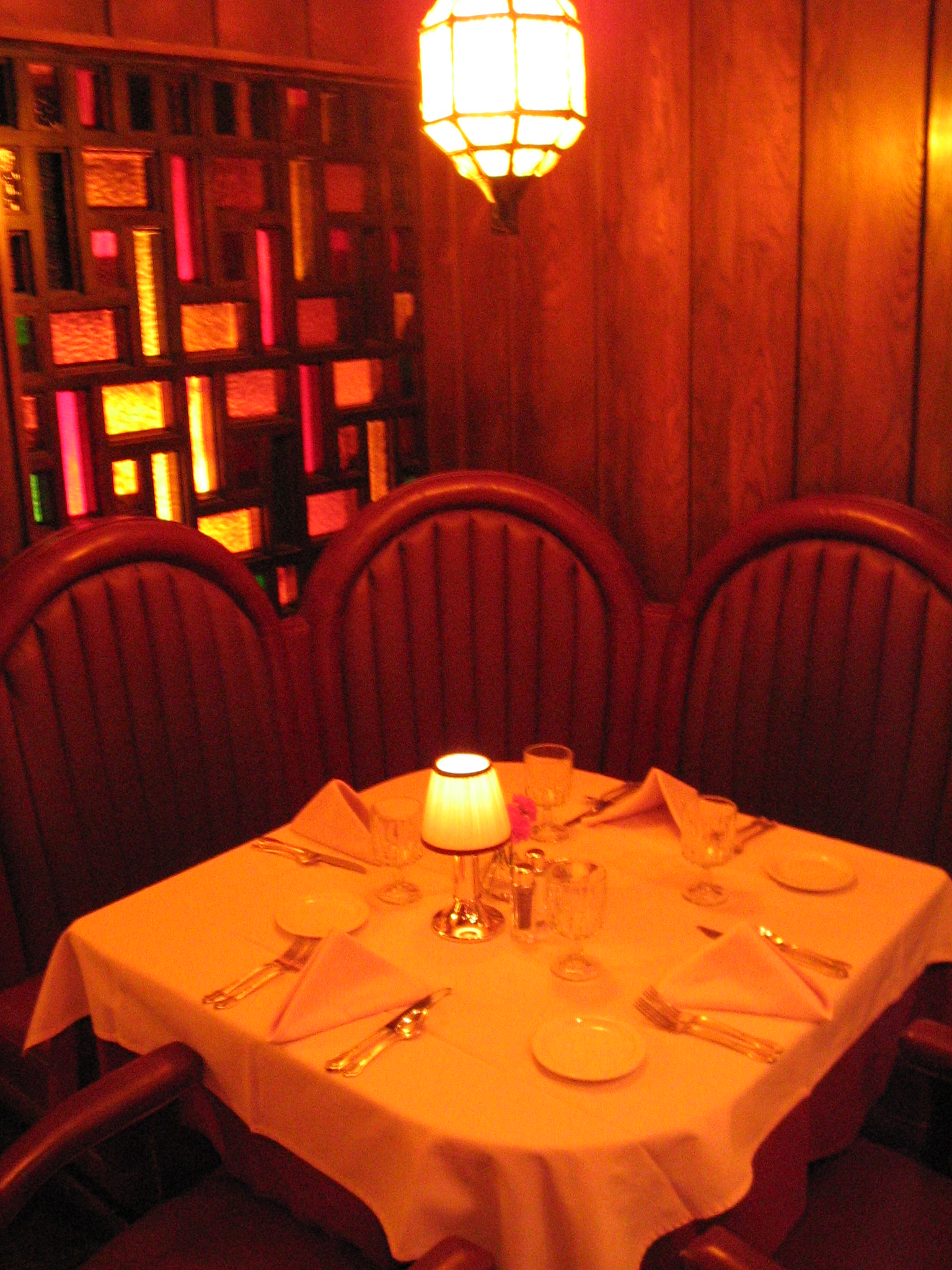
photo by Dean Curtis, 2003
Sadly, in 2012 the owner, Peter Makris’ daughter Nanci Makris, passed away. Her family decided to close the restaurant at the end of the year.
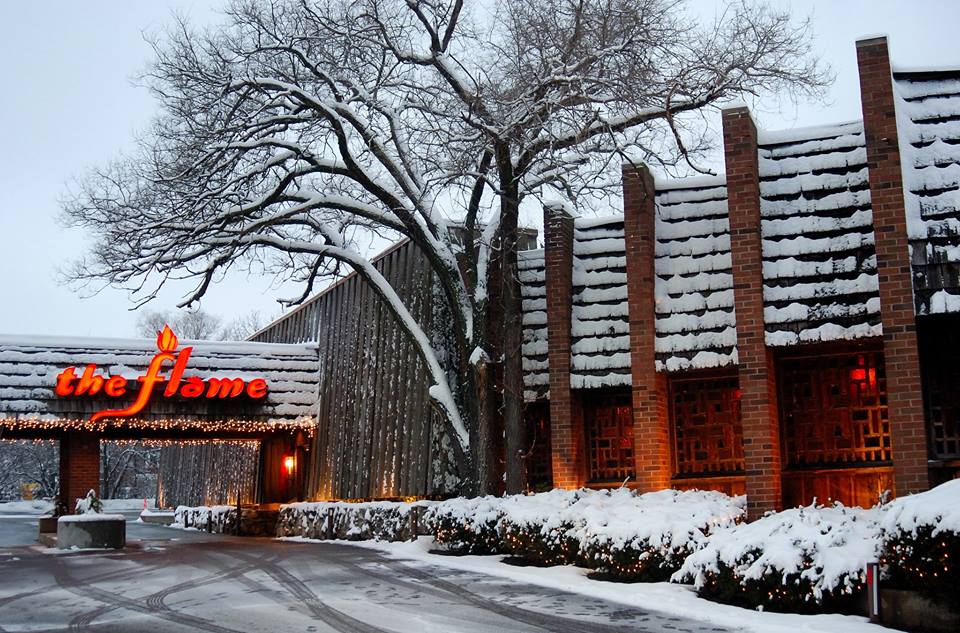
photo from The Flame facebook page
The Flame had a final blowout on New Years Eve, 2012. Local photographer Jeffrey C. Johnson created a book with photo memories of the closing night at The Flame. Also check his Flickr for some great photos of The Flame.
The building has been stripped and remodeled for a new restaurant called Outriggers Flame. A few of the elements of the original decor are still there, such as rock walls and wood paneling (strangely, not an outrigger is to be found), but the tree lounge, booths, stained glass, and lamps are gone.