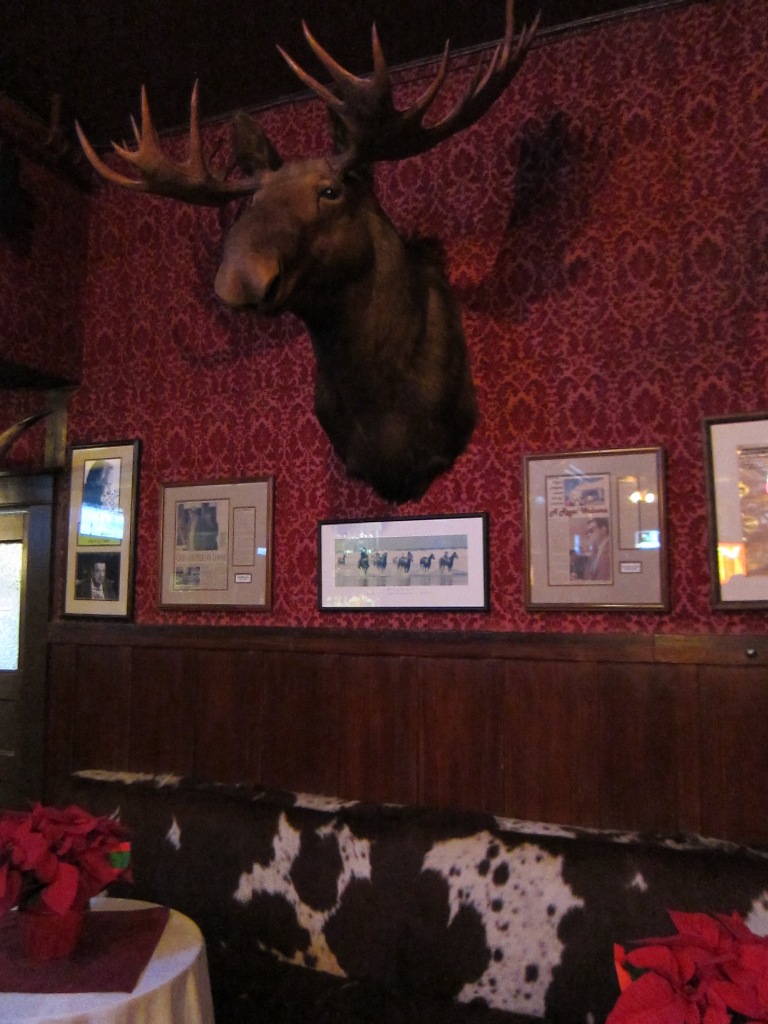
Huber’s Café, Portland, Oregon

Since Thanksgiving Day is almost upon us and I just returned from one of my favorite cities in the U.S., Portland, it’s a good time to feature Huber’s Café, Portland’s oldest restaurant.
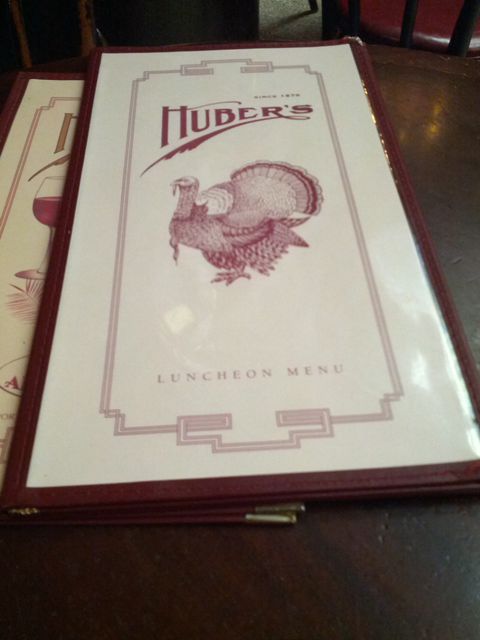
 

Hubers


Huber’s Café claims to be in operation since 1879. But does it really go back that far?

There are three important factors when looking at a claim of oldest restaurant in any place: the name, the owner(s), and the location. In my opinion, if all three factors change several times it is unreasonable to claim that it is the same restaurant. However, if one or two of these factors remains unchanged over the years then it is close enough to being the same restaurant. In the case of Huber’s, the name has remained the same since 1895, it has existed in the current location since 1910, and the management has been in the same family since 1912, so it is reasonable to claim that the restaurant originated in 1895, but not in 1879. However, that still makes it Portland’s oldest restaurant.

Another restaurant in Portland that sometimes makes the claim to be the oldest restaurant in town, Jake’s Famous Crawfish, says it originated in 1892, but its current location opened in 1911, became Jake’s in 1920 through a change in ownership, and has been through several more ownership changes, most recently by the McCormick & Schmick chain in 1972. So by my rules it dates back to 1911, not 1892.
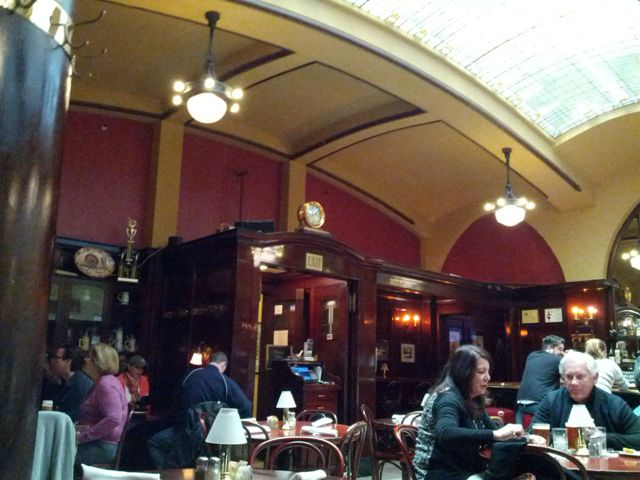


Huber's dining room entrance. Image by The Jab, 2013.

Huber’s dining room entrance. Image by The Jab, 2013.


Huber’s History

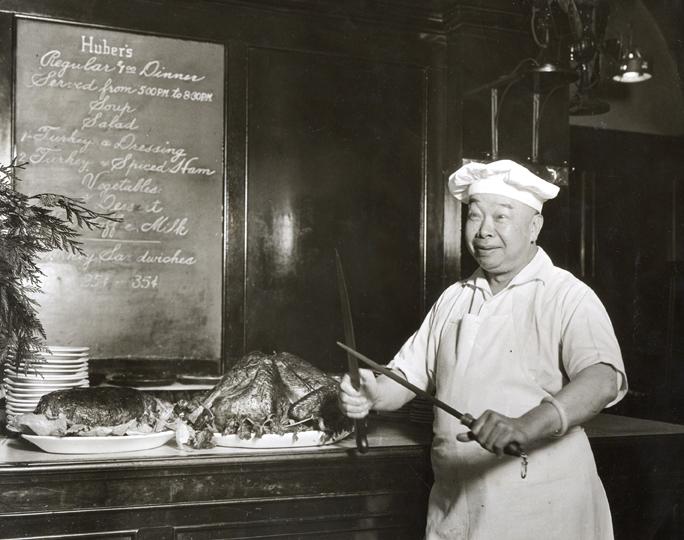
Frank Huber started working as a bartender at the Bureau Saloon (established in 1879) at First and Morrison streets in 1884. He took over ownership in 1888 and hired a Chinese cook named Jim Louie in 1891. In 1895 Huber opened Huber’s bar on Washington Street, with Louie as the cook. In 1910 Huber’s moved to its present location in the Pioneer Building, formerly the Railway Exchange Building. Jim Louie took over management of the bar when Frank Huber died in 1912, and converted it into a restaurant when Prohibition was enacted. In 1941 Jim’s nephew Andrew joined as the Louie family entered into joint ownership with the Huber family. Upon Jim’s passing away in 1946, Andrew took over management, and became sole owner in 1952. Impressively, the Louie family are still owners of Huber’s.
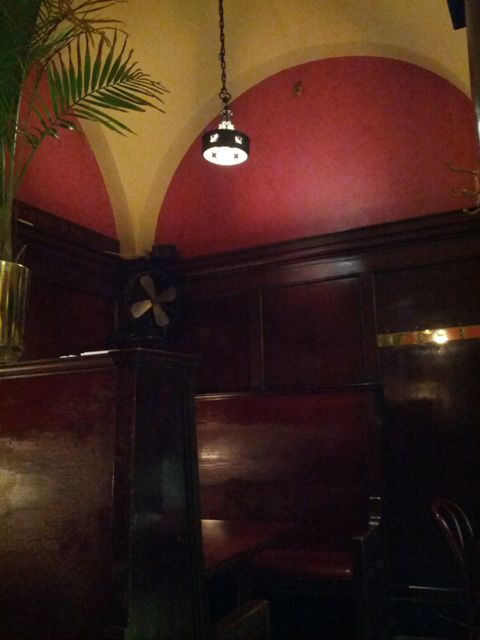
 

Huber's classic wooden booths. Image by The Jab, 2013.

Huber’s classic wooden booths. Image by The Jab, 2013.


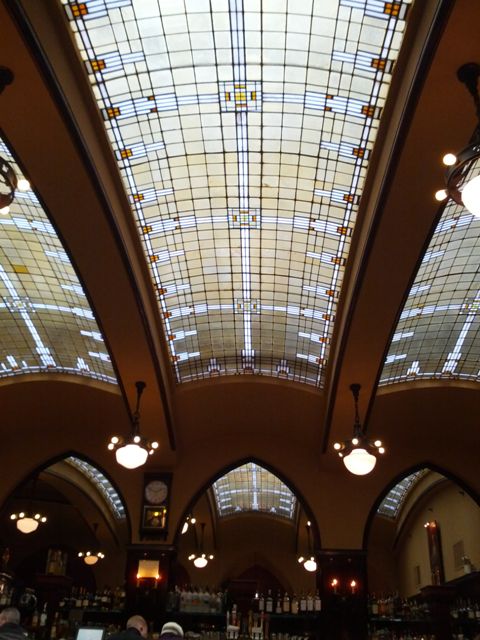
The main bar and dining room are accessed via a long hallway from the main 3rd street entrance (I recommend you avoid the newer bar area’s entrance to the left). The room features mahogany wood paneling, tile floors, a beautiful arched ceiling with massive stained glass skylights, and wrought iron lamps, all dating back to the 1911 opening.


Hubers2

Image by The Jab, 2013.


Jim Louie. Image by Menuism.com

Let’s talk turkey! Jim Louie started featuring turkey dinners with all the trimmings at Huber’s back in the 19th Century (check out the oil painting of Jim in the restaurant), and it’s still a specialty today along with turkey sandwiches, turkey gumbo, turkey piccata, marsala, and cordon bleu, as well as turkey drumsticks and wings. They also serve a great sliced ham dinner, or you can get a combination turkey/ham dinner, which is what I had on my recent visit. The turkey was moist and tender and the ham was also very tasty. I liked the sage dressing and mashed potatoes but the vegetables were a bit undercooked.


Turkey dinner at Huber’s. Image by Menuism.com


Another specialty at Huber’s is Spanish Coffee, a sweet blend of Bacardi 151, triple sec, Kahlua, and coffee, made tableside with plenty of flame and flair, and topped with whipped cream and nutmeg. It was developed in the 1970s by James Kai Louie, Andrew Louie’s son, but one online source claims he got the idea from the Fernwood Inn in Milwaukee.


Huber’s Café, where every day is Thanksgiving! Happy Thanksgiving to you, dear readers!


Huber’s Café
411 SW 3rd Ave., Portland, OR 97204
503-228-5686
Open Mon-Th 11:30am – 10pm (bar open until midnight), Fri-Sat 11:30am-11pm (bar until 1am), Sun 4pm-10pm
The Iron Door, Johnsville, California

Every fall I like to do a long weekend drive into the mountains of Northern California to see the fall colors. If timed right there are some areas that rival anything back east or in the Rockies, such as massive groves of aspen turning gold in front of dramatic snow-crowned mountain peaks. My favorite areas for fall color are the eastern Sierra along U.S. 395 and the surrounding roads, such as the spectacular June Lake Loop highway, and the Feather River Canyon from Oroville to Portola in Plumas County. This year I went with some friends back to the Feather River route (we previously went together in 2010), but this time instead of starting in Oroville to a base in Quincy this time we started in the overdeveloped gold country towns of Grass Valley & Nevada City, heading northeast on scenic highway 49 through sparsely populated Sierra County (pop. 3,240 and only one traffic light) to the hidden Lakes Basin, then on to Portola to spend the night. The next day we drove to Quincy and down the beautiful Feather River Canyon.

image by http://www.fromvalerieskitchen.com

Along highway 70 between Quincy and Portola lies the charming small town of Graegle, which used to be a company town for the Graegle Lumber Company, a box manufacturer for the California Fruit Exchange in the 1920s through the mid-1950s. The town consists of several small red houses from the company town (some converted to businesses), the friendly Knotty Pine Tavern, a few motels and cabins, and, surprisingly, three golf courses. It makes a great base for exploring the Lakes Basin Recreation area nearby, a beautiful mini-Sierras of cragged peaks and dozens of lakes. Nearby to Greagle is the tiny town of Johnsville and its only business, the Iron Door restaurant.

Placemat art at Iron Door. Image by Joel E. on Yelp.com.

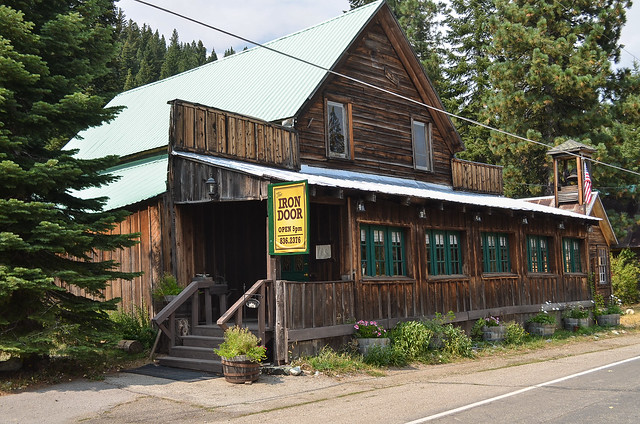
In 1951 gold was discovered on the slopes of Eureka Peak in Plumas County. Johnsonville was founded in 1876 at the base of the peak to house and cater to the growing mining population. The building that is now the Iron Door was built in 1906 and served as a general store and post office, but the mine closed in the 1940s (some of the mine’s artifacts, buildings, and equipment are preserved in the interesting Plumas Eureka State Park next to Johnsonville). In 1961 the Iron Door restaurant opened; and it remains in the same historic building (the only commercial building left in the small town). When entering the restaurant you pass the bar on your left and then enter the main dining room, a large room with an open ceiling of beams and rafters and a floor of pine. The room is filled with antiques and artifacts, making for a cozy, homey atmosphere, and giving you plenty to look at when nature calls. Be sure to look at the longboard skis on display above the bar. In 1853 a Norwegian miner introduced longboard skiing to the region and in 1861 the miners on Eureka Peak started the first downhill ski competition in the western hemisphere! Every winter longboard ski races are still held by the Plumas Ski Club, with the skiers wearing period attire. Our waitress told us that she even participated in the race, and that you reach very high speeds because you have to go straight down the mountain!

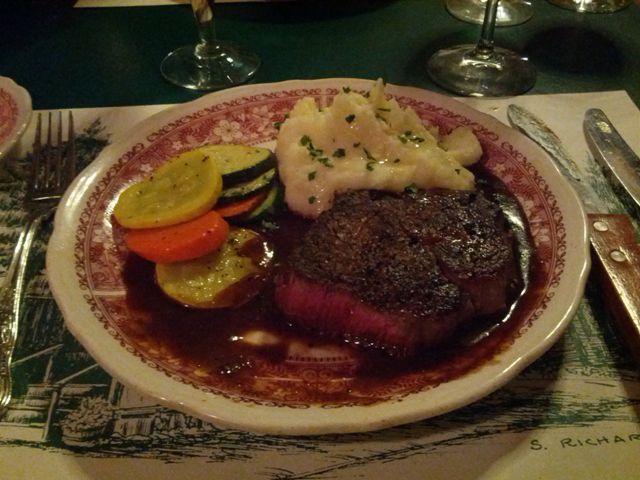
The menu at the Iron Door consists of steak, seafood, German schnitzel, and pasta dishes, with some daily specials such as veal piccata. Everything is house made and delicious. I went with a steak, which was tender, flavorful, and done perfectly. After dinner we tried the house “Johnsville special” dessert of vanilla ice cream, crème de menthe, and Ovaltine sprinkled on top, served in a parfait glass. It sounds strange but it was good! And it was old-fashioned, which I always appreciate.

IronDoorSteak

I cheated and took a bite before taking the picture! Image by The Jab.

The Iron Door is only open in May-October and is very popular among locals and visitors-in-the-know so it’s best to make a reservation. And go early (they have a lovely bar for that before dinner cocktail) because most small towns in the mountains roll up the rugs at around 9:00 or 10:00. Although I like fall best, the Plumas County area is also great in the spring and summer. There are some nice lakes and the fishing reportedly is some of the best in the state. The area is much less crowded than the mountains south of I-80. Just don’t tell everyone. Let’s keep it our little secret, OK?

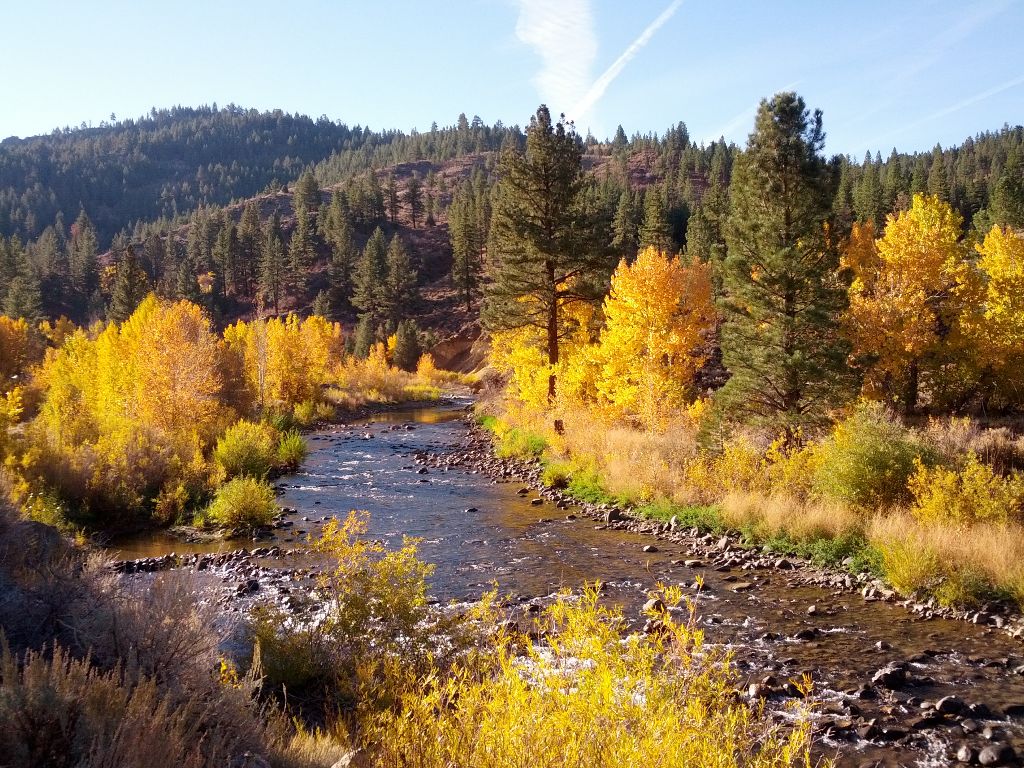
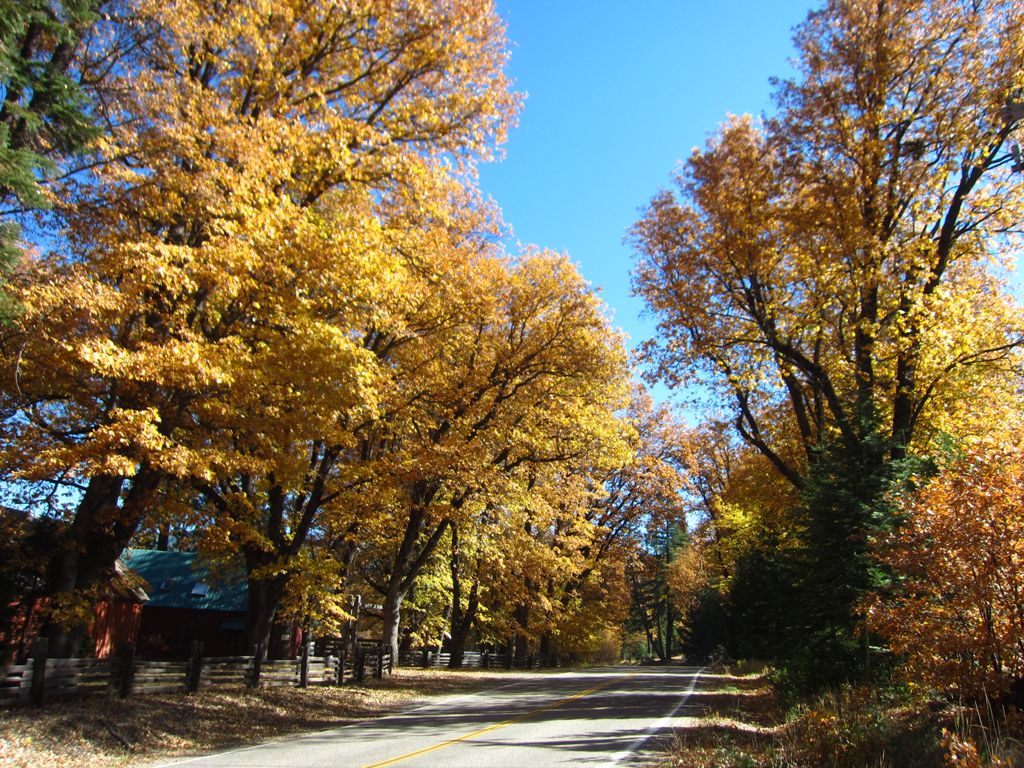
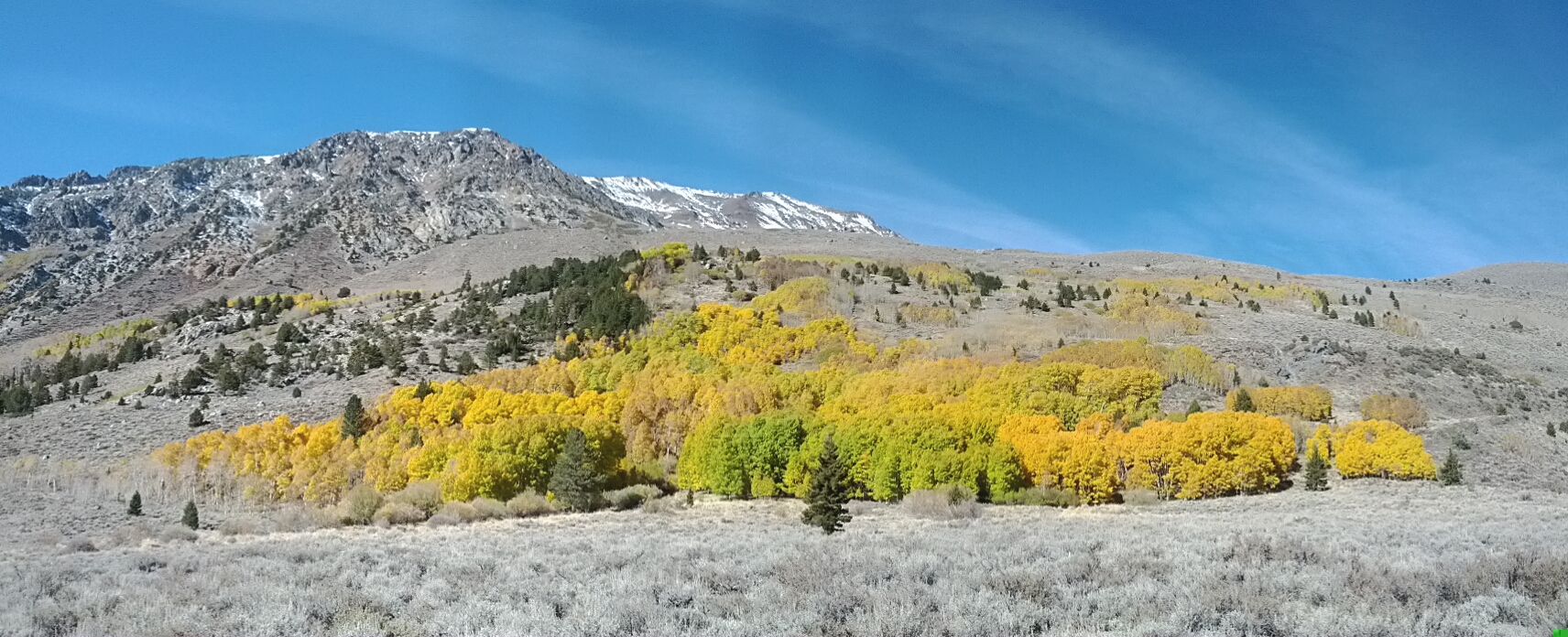
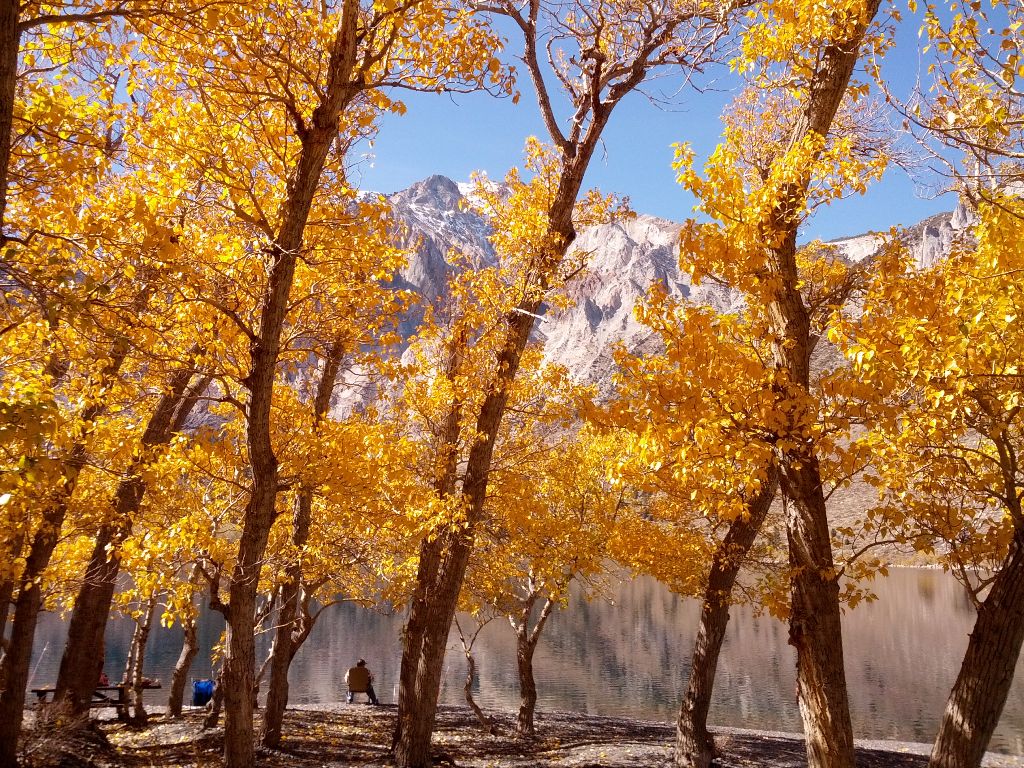
Here are some fall color shots I took on this trip and last year in the Eastern Sierra. See you next fall, fellow leaf peepers!

Walker River Canyon, CA, Oct. 2012. Image by The Jab.

Walker River Canyon, CA, Oct. 2012. Image by The Jab.

La Porte Road, Plumas County, Oct. 2013. Image by The Jab.

La Porte Road, Plumas County, Oct. 2013. Image by The Jab.

June Lake Loop, Oct. 2012. Image by The Jab.

June Lake Loop, Oct. 2012. Image by The Jab.

Convict Lake, Oct. 2012. Image by The Jab.

Convict Lake, Oct. 2012. Image by The Jab.

The Iron Door
5417 Main Street, Johnsville, CA, 96103
530-836-2376
Open from May until the last Sunday in October, Wed through Mon 5pm – 9pm